
Sunday, May 3, 2015

Sunday, April 26, 2015
Blog Post #5 Part B
ATTN: This blog post is a continuation of blog post 5.

"My PLN"
Throughout my semester in EDM 310, I have built up a vast personal learning network. I can mainly accredit this success to Twitter. Through the use of twitter's features such as "retweet," I have found so many different teachers across the world who provide ideas for everything needed in the classroom. I have kept track of a lot of my network through pinning blogs, twitter accounts, and websites to Pinterest. I like using Pinterest to track because it will suggest things to "pin" based on my personal boards. I have found resources such as teaching materials, teacher blogs, classroom blogs, twitter accounts, and even "teacher outfits!"
"My PLN"
Throughout my semester in EDM 310, I have built up a vast personal learning network. I can mainly accredit this success to Twitter. Through the use of twitter's features such as "retweet," I have found so many different teachers across the world who provide ideas for everything needed in the classroom. I have kept track of a lot of my network through pinning blogs, twitter accounts, and websites to Pinterest. I like using Pinterest to track because it will suggest things to "pin" based on my personal boards. I have found resources such as teaching materials, teacher blogs, classroom blogs, twitter accounts, and even "teacher outfits!"
Sunday, April 19, 2015
C4K #6
#1Henly H.
Henly's blog post was from the Bible. This post was about forgiveness and gratefulness, through a story about Jonah. While Henly did not completely grasp what the story was about, she still provided great input on what she thought it was about! Either way, she did find a great moral in the story. I commented along with her teacher explaining what I thought the story was about, in addition to my opinion on the moral she came across!
#2Dakota
Dakota's post was his bucket list. I told him that I share many of his bucket list items in my bucket. He has great goals such as graduating, getting married, and having children. I told him that my favorite task on his list was to visit Alaska, since that is something I have always wanted to do.
#3.Henly H.
Henly's blog post was regarding her spring break. She told her readers all about her skiing trip she took with her friends. I told Henly about our rainy Mobile spring break, and how I miss going skiing over break when I was in high school.
Henly's blog post was from the Bible. This post was about forgiveness and gratefulness, through a story about Jonah. While Henly did not completely grasp what the story was about, she still provided great input on what she thought it was about! Either way, she did find a great moral in the story. I commented along with her teacher explaining what I thought the story was about, in addition to my opinion on the moral she came across!
#2Dakota
Dakota's post was his bucket list. I told him that I share many of his bucket list items in my bucket. He has great goals such as graduating, getting married, and having children. I told him that my favorite task on his list was to visit Alaska, since that is something I have always wanted to do.
#3.Henly H.
Henly's blog post was regarding her spring break. She told her readers all about her skiing trip she took with her friends. I told Henly about our rainy Mobile spring break, and how I miss going skiing over break when I was in high school.
Blog Post #13
Apps for the Classroom (Research 5 apps that will help teachers and students to be more effective in the elementary classroom.)

My top 5:
1. Quizlet
Quizlet is an app that is available not only on your phone, but on your computer as well. While most students in college use this app for cramming for tests, it can very easily and effectively be incorporated into the classroom. One way I have found it useful is for sight words. On the app, you can type in words on one side of a digital flash card, and a definition on the other. I used this in tutoring by putting a sight word on one side and a sentence using the sight word on the other side. The great part is, when the students get home, they can log on using their parents' phone to independently study. (Fun fact: The student can also click "read aloud" so the app will tell the student what the word is if they are having trouble.)
2. Scholastic Book Wizard
Scholastic Book Wizard is a great app for AR/STAR reading. With this app, teachers and students can scan the barcode on the back of the book, and receive a quick glance at what the book is about, who it might interest, the grade-equivalent level, the guided reading level, and the AR level.
3. Stack the States
One of the most nerve-wracking homework assignments for a parent seems to be when it comes time for their child to memorize the 50 states and their capitals. Using "Stack the States" students can practice the name, geographic location, and capitals of all 50 states through fun games and activities.
4. My Math Flash Cards
My math flash cards appeals to the student who prefers digital worksheets as opposed to paper ones. With My Math Flash Cards, students can practice their time tables with the convenience of digital, immediate answers.
5. Class Dojo
Class Dojo is a GREAT app for parent-teacher communication. Similar to a "group message" teachers can send out updates, homework, or simply words of encouragement. This also provides parents with an easy way to get in touch with the teacher when email isn't effective.
Sunday, April 12, 2015

Sunday, April 5, 2015
Blog Post #11
"What can we learn from these teachers?"

1. Back to the Future by Brian Cosby
Brian Cosby teaches us a variety of important teaching aspects as supported by his former class. Cosby focuses on the importance of creativity and real world connections. What I found most interesting was his anecdote about a former class where he asked his students basic questions about their everyday life. (i.e. What state do you live in? What country do you live in? and What is your address?) Few of his students could answer all of the questions correctly. I found this interesting because of how much my class focused on these basic topics in Kindergarten.Therefore, I learned that we should not teach our students only the state standards of curriculum, but also parts of everyday knowledge.
2. Blended Learning Cycle by Paul Andersen
I really enjoyed learning about Paul Andersen's method of teaching. In his method, acronyms play a large part in successful teaching/learning. A big fan of acronyms myself, I found his various ways to incorporate them to be very useful. Andersen creates acronyms to assist the students in retaining what they have learned for the day.
3. Making Thinking Visible by Mark Church
Mark Church appears to enjoy the teaching style that is a mixture of PBL, lecture, and presentation based. In his video, he had his students write on a banner what they already knew about human origins. After his lesson, he allowed them to go back and add on what they had learned. I really like this idea, as giving the students a creative activity prior to teaching is a great way to spark interest in the subject at hand.
4. Building Comics by Sam Pane
In "Building Comics" Sam Pane focuses on teaching his students internet safety and the importance of being a digital citizen. I found this to be very useful, as I. along with many other students from my age group, were never really taught about internet safety and digital citizenship; therefore, we have a large rate of cyber-bullying, and poor internet safety techniques.
5/6. Project Based Learning by Dean Shareski and Roosevelt Elementary's PBL Program
Project based learning is already something that I am highly interested in. Therefore, videos 5 and 6 only reiterated that. In both of these videos, the use of PBL is elaborated on and used to combine subjects.. What I liked about these videos, is that technology was incorporated and subjects were merged. Coming from a school district where technology is not viewed as that important, I enjoy finding out different ways that I can, hopefully, one day incorporate into my classroom. Additionally, I really like the idea of merging subjects to teach a lesson. Why just focus on one subject when your students can learn more from the combination of multiple ones?
1. Back to the Future by Brian Cosby
Brian Cosby teaches us a variety of important teaching aspects as supported by his former class. Cosby focuses on the importance of creativity and real world connections. What I found most interesting was his anecdote about a former class where he asked his students basic questions about their everyday life. (i.e. What state do you live in? What country do you live in? and What is your address?) Few of his students could answer all of the questions correctly. I found this interesting because of how much my class focused on these basic topics in Kindergarten.Therefore, I learned that we should not teach our students only the state standards of curriculum, but also parts of everyday knowledge.
2. Blended Learning Cycle by Paul Andersen
I really enjoyed learning about Paul Andersen's method of teaching. In his method, acronyms play a large part in successful teaching/learning. A big fan of acronyms myself, I found his various ways to incorporate them to be very useful. Andersen creates acronyms to assist the students in retaining what they have learned for the day.
3. Making Thinking Visible by Mark Church
Mark Church appears to enjoy the teaching style that is a mixture of PBL, lecture, and presentation based. In his video, he had his students write on a banner what they already knew about human origins. After his lesson, he allowed them to go back and add on what they had learned. I really like this idea, as giving the students a creative activity prior to teaching is a great way to spark interest in the subject at hand.
4. Building Comics by Sam Pane
In "Building Comics" Sam Pane focuses on teaching his students internet safety and the importance of being a digital citizen. I found this to be very useful, as I. along with many other students from my age group, were never really taught about internet safety and digital citizenship; therefore, we have a large rate of cyber-bullying, and poor internet safety techniques.
5/6. Project Based Learning by Dean Shareski and Roosevelt Elementary's PBL Program
Project based learning is already something that I am highly interested in. Therefore, videos 5 and 6 only reiterated that. In both of these videos, the use of PBL is elaborated on and used to combine subjects.. What I liked about these videos, is that technology was incorporated and subjects were merged. Coming from a school district where technology is not viewed as that important, I enjoy finding out different ways that I can, hopefully, one day incorporate into my classroom. Additionally, I really like the idea of merging subjects to teach a lesson. Why just focus on one subject when your students can learn more from the combination of multiple ones?
Sunday, March 29, 2015
C4K Project 6 #5

For my first student I commented on Rashad's blog. Rashad made a great post regarding respect toward teachers. His post was in response to a prompt by his teacher, "Provide advice for future students." He provided personal experience on what happens when you disrespect your teachers in addition to what happens when you do respect your teachers. In my comment I told Rashad that his post was great and I also gave him personal advice on respecting everyone.
Post 2:
For my second post, I commented on Arturo's blog. Arturo provided a great post regarding first impressions. Arturo stated that first impressions are not always accurate, whether you are talking about a class or meeting a person for the first time. In my comment I told Arturo that I too agree that first impressions are not always accurate. I provided a personal experience story informing Arturo that I have had not just one, but multiple poor first-impressions.
Post 3:
For my third post I was asked to comment on Jesse's blog. Jesse provided a great review on a Group interpretation play he recently saw at his school. Having never heard of GI, I found this post to be very interesting! In my comment I told Jesse about my high school improv team participating in the Rubber Chicken Festival, which sounds similar to GI.
Blog Post #10
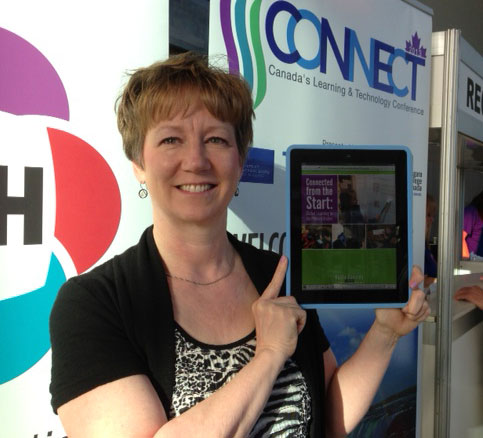
Interviews with Kathy Cassidy
 |
| Kathy Cassidy with her book, Connected from the Start |
Monday, March 23, 2015
Sunday, March 22, 2015
Blog Post #9
What Can Teachers and Students Teach Us About Project Based Learning?
7 Essentials for Project Based Learning
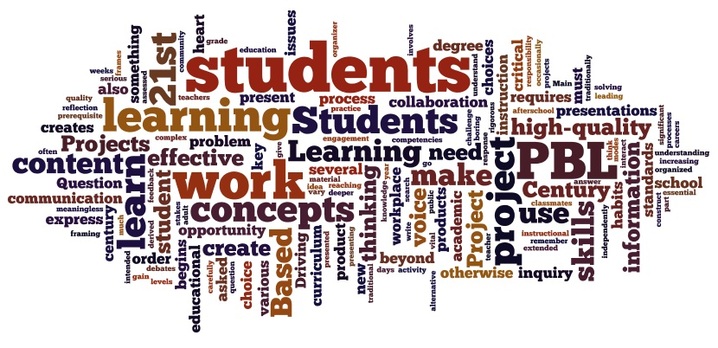
In an article by John Larmer and John R. Mergendoller, the 7 base components of PBL are described to create the perfect PBL plan.
1: A need to know. In order for the student to become interest, the teacher must spark interest and create the "need to know."
2. A driving question. The driving question feeds off of the "need to know." This is the question that creates curiosity in the student's mind.
3.Student voice and choice. Giving the students a choice in the project helps keep interest.
4. 21st century skills. "A project should give students opportunities to build such 21st century skills as collaboration, communication, critical thinking, and the use of technology, which will serve them well in the workplace and life."
5.Inquiry and Innovation.
6.Feedback and Revision. Given students the opportunity for revision relieves some of the pressure and giving feedback provides motivation.
7.Publicly Present the project. Presenting a project to a group encourages the student to assure better quality.
 |
| IMG SOURCE: TGC CAPSTONE |
7 Essentials for Project Based Learning
In an article by John Larmer and John R. Mergendoller, the 7 base components of PBL are described to create the perfect PBL plan.
1: A need to know. In order for the student to become interest, the teacher must spark interest and create the "need to know."
2. A driving question. The driving question feeds off of the "need to know." This is the question that creates curiosity in the student's mind.
3.Student voice and choice. Giving the students a choice in the project helps keep interest.
4. 21st century skills. "A project should give students opportunities to build such 21st century skills as collaboration, communication, critical thinking, and the use of technology, which will serve them well in the workplace and life."
5.Inquiry and Innovation.
6.Feedback and Revision. Given students the opportunity for revision relieves some of the pressure and giving feedback provides motivation.
7.Publicly Present the project. Presenting a project to a group encourages the student to assure better quality.
In the video Project-Based Learning for Teachers many important aspects were covered. The main points that mean the most to me included: collaboration, communication, and critical thinking; allow students to take charge of their own learning; always have a purpose; brainstorm; meet deadlines; and refine the ending product. Each of these aspects are incredibly important for teachers to do in order to host a successful PBL lesson.
In the video "What motivates Students" students describe what they find important in PBL. I found this to be very important and informative. Students stated that they liked positive feedback from teachers, classroom incentives, and free-time incentives. They also stated that their goals consisted of "wanting to do well in life, having a good career, and being able to take care of their families. This was very helpful because it gives the teacher knowledge of how to motivate the students.
High School Teachers meet the Challenges of Project Based Learning
This video shows the crossover from conventional style teaching to project based learning. This helps a lot in high school due to the inclusion of real-world problems and connections. This helps to keep motivation and make PBL exciting for not only students, but teachers as well.
This video shows the crossover from conventional style teaching to project based learning. This helps a lot in high school due to the inclusion of real-world problems and connections. This helps to keep motivation and make PBL exciting for not only students, but teachers as well.
In this article, the reader meets two students who are currently in a PBL course. What I found the most interesting, however, is that the teacher simply gives the students the prompt "It bugs me the most when..." and allows the students to run with their response. This gives ample leeway for the students to be innovative in creating their projects and provides a real world connection. Allowing the students to choose their own topic based upon their interests keeps motivation in the forefront of their minds.
Thursday, March 19, 2015
Project 13
Is it Magnetic?
 |
| Image Source: Texas Watchdog |
This project teaches students in second grade the difference between magnetic and nonmagnetic objects. This project also teaches students how to work collaboratively to complete research and writing assignments in a timely manner,
Is it Magnetic? Lesson Plan
Is it Magnetic? Lesson Calendar
Is it Magnetic? Project/Evaluation Rubrics
Is it Magnetic? Project Checklist
 |
| VIrtual Poster Sample (Included at end of Lesson Plan) |
Sunday, March 15, 2015
Blog Post #8
For this weeks assignment we have been instructed to watch Randy Pausch: The Last Lecture, and I have to admit, Randy Pausch definitely knows what he is talking about. Not only is he a phenomenal inspiration, but a great teacher to say the least. Throughout his lecture, I learned many things regarding teaching and learning. What stuck out the most to me was his story regarding setting the bar. As a teacher, we never know exactly where the bar is. I found it to be great advice that his mentor told him to say "You can do better." He is right. While we may not know exactly where the bottom bar is, we will never know where the top bar is. It is our job as teachers to motivate our students to reach their highest potential. The best way to do that is to not give them a "maximum."
Video courtesy of YouTube.
C4T #2
Emailed Mr. Tashbin regarding first C4T
For my second post in this series, I was asked to comment on the blog DML Central under the author Howard Rheingold's post "KitHub Designed to Empower Young Innovators." I found this post to be very interesting, as it discusses a monthly subscription box available to the younger generations as well as schools. Within this box is a technology-accompanied experiment that can be conducted at home. Rheingold does a phenomenal job of describing the box, in addition to, providing a one-on-one interview with one of the designers from KitHub, Tara Tiger Brown. You can even view the video here! I told Rheingold about my astonishment with these boxes alongside my love for the idea of "monthly boxes."
Sunday, March 1, 2015
Blog Post #7
 |
| Technology in the Classroom |
Using iMovie and the Alabama Virtual Library in Kindergarten is an interview with John Strange, Michelle Bennett, and Elizabeth Davis. Bennett discusses how students use iMovie/iTrailer to complete a book project in the kindergarten classroom. I find this incredibly interesting because I know of many college level students that cannot efficiently do this, but the five and six year old students can do it weekly. Davis discusses Alabama Virtual Library. AVL is an easy way to do research, similar to our very own Marx Virtual Library here at the University of South Alabama. I enjoyed Davis' point on teaching kindergarten students how to virtually research anything.
C4K February Summary
For February I was asked to follow the blog of seventh grade student, Max K. Max wrote many great posts during my time following him, and does a fantastic job at reviewing his books.

First post:
In Max's introduction post from Mr. Boylen's 7th grade Literature class, he describes his various hobbies and favorites. He introduces his friends and family. Max and I share various characteristics such as the love for reading and the liking for the color sea foam green. In my comment I reintroduced myself to Max and told him about our similarities. I also informed him about my hobbies and favorites, including my other favorite color. Max writes very well and shows an enjoyment for blogging through his detailed posts.
Second Post:
In my second response to Max's posts I was able to catch a glimpse of what the book Harry Potter and the Half-Blood Prince was like. Max did a great job at reviewing this book and made me really want to read it! I told Max that I too enjoyed reading J.K. Rowling's work in middle school, even if the books were hard to get into.
Third Post:
In Max's post on the Deathly Hallows, I was given the challenge of reading the book, as he did another great review! It is clear the Max really enjoys reading, especially novels such as the Harry Potter Series. Although he will no longer be my C4K poster, I still plan on returning to his blog to read his posts!
First post:
In Max's introduction post from Mr. Boylen's 7th grade Literature class, he describes his various hobbies and favorites. He introduces his friends and family. Max and I share various characteristics such as the love for reading and the liking for the color sea foam green. In my comment I reintroduced myself to Max and told him about our similarities. I also informed him about my hobbies and favorites, including my other favorite color. Max writes very well and shows an enjoyment for blogging through his detailed posts.
Second Post:
In my second response to Max's posts I was able to catch a glimpse of what the book Harry Potter and the Half-Blood Prince was like. Max did a great job at reviewing this book and made me really want to read it! I told Max that I too enjoyed reading J.K. Rowling's work in middle school, even if the books were hard to get into.
Third Post:
In Max's post on the Deathly Hallows, I was given the challenge of reading the book, as he did another great review! It is clear the Max really enjoys reading, especially novels such as the Harry Potter Series. Although he will no longer be my C4K poster, I still plan on returning to his blog to read his posts!
Sunday, February 22, 2015
Blog Post #6
Q & A With Anthony Capps
 |
| Image Source: Evergreen |
Subscribe to:
Posts (Atom)